The KDXB(L)-100kVA/100kV Mobile High-Voltage Withstand Test System is specifically designed for on-site insulation testing of high-voltage systems in the rail transit industry. It is widely used in maintenance depots and manufacturing facilities for high-speed trains, EMUs (Electric Multiple Units), and urban rail vehicles.
In a typical application, the mobile test unit is wheeled directly to the train maintenance bay. Engineers connect the high-voltage output terminal of the system to the train’s main high-voltage power cable, while grounding the return path securely. The capacitive load of the cable (up to 0.031μF) is automatically recognized by the system, which then initiates an automatic resonant tuning process to achieve optimal test conditions at 50Hz.
Using the intuitive touch-screen interface on the control trolley, operators set the required test voltage—up to 100kV AC—and duration (typically 60 minutes). Once initiated, the system automatically ramps up the voltage, monitors real-time parameters (high-voltage, current, frequency), and maintains a stable output with less than 1.0% voltage fluctuation. If any abnormality occurs—such as flashover, overcurrent, or overvoltage—the system immediately triggers protective shutdown mechanisms, ensuring safety for both personnel and equipment.
After the test is completed, the system automatically reduces the voltage and cuts off the power supply. Test results, including peak voltage, duration, and any fault events, are saved internally and can be printed or exported via USB for documentation and compliance reporting.
Thanks to its modular, split-body design, the system is easy to transport and assemble on-site. The rugged construction, integrated casters, and shock-absorbing mounts make it ideal for industrial environments. Meeting international standards such as GB/T 16927 and IEC 60270, this mobile test solution provides a reliable, efficient, and safe method for performing high-voltage withstand tests in real-world conditions.
Electrical fault diagnosis:
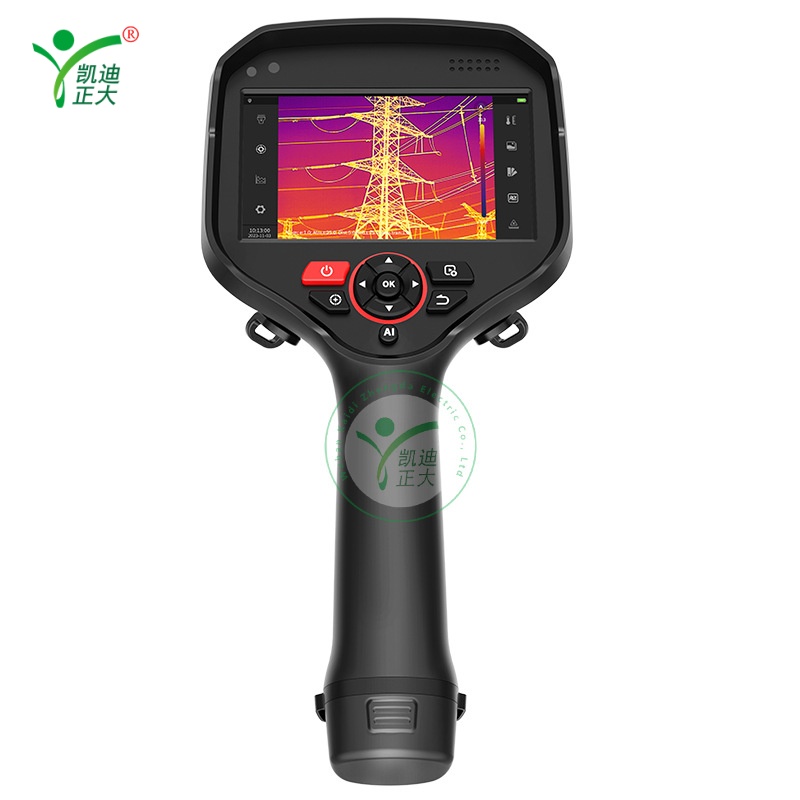
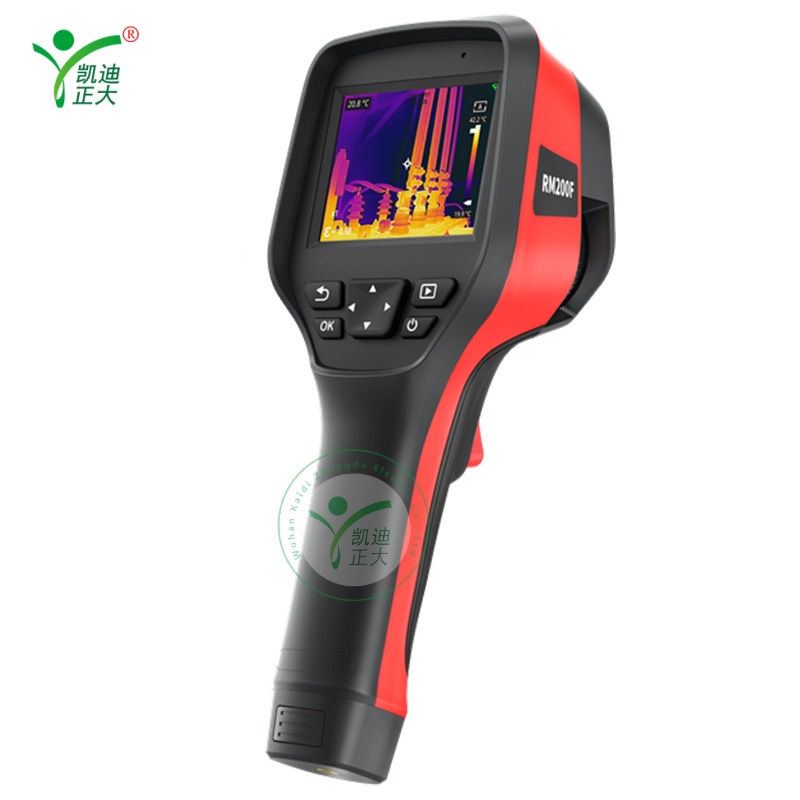
Detect overheating issues in electrical equipment such as transformers, switchgear, and cable joints, and identify potential fault points in advance (such as loose connections and insulation aging).
In power inspection, thermal imaging is used to quickly locate high-temperature abnormal areas, avoiding equipment damage or power outages.
Building insulation and heat leakage analysis:
Detect the thermal insulation performance of walls, roofs, doors and windows, and identify areas with air leakage, moisture, or insulation material failure.
Analyze the thermal distribution uniformity of heating systems (such as underfloor heating and air conditioning) and optimize energy efficiency.
Pipeline and HVAC system testing:
Identify leakage points or insulation damage in water and steam pipelines.
Check the heat exchange efficiency of the HVAC system to improve operational stability.
Performance Description
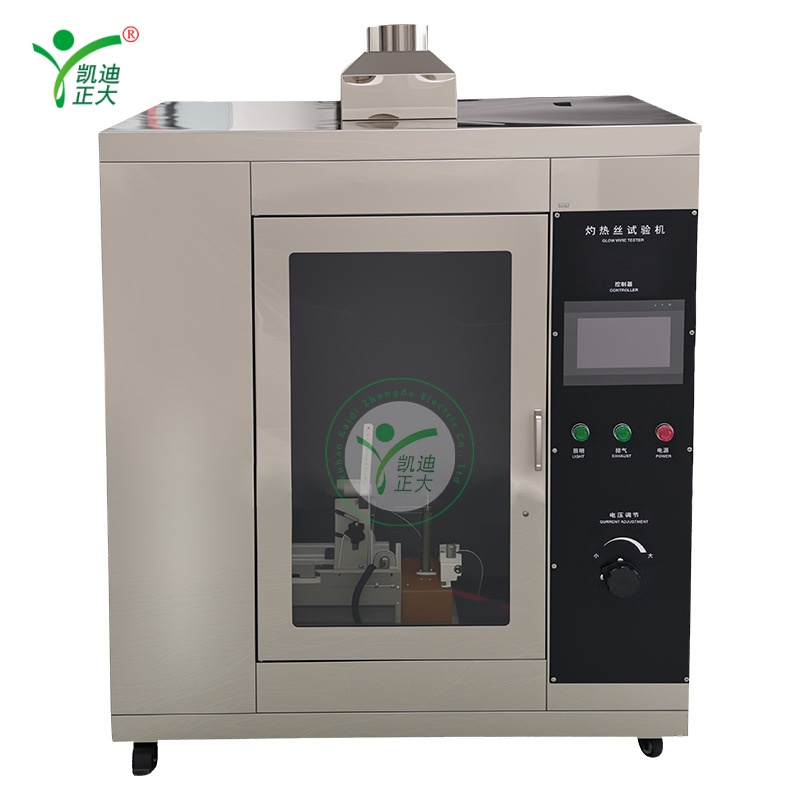
Instructions for each button:
1. Actual measured current value display
2. Actual temperature value display
3. Ta burning time, also known as test time
4. Ti ignition time, which is the time from the test to the ignition of the specimen
5. Te extinguishing time, which is the time from the test to the extinguishing of the specimen
6. The test time is set to 30 seconds according to the standard. If there are different requirements, please set them separately
7. The experimental temperature is set to 960 ℃ according to the standard. If there are different requirements, please set them separately
8. Heating switch
9. Test start switch
10. Test stop switch
11. Record the ignition time switch (when the test piece is ignited and pressed)
12. Record the extinguishing time switch (pressed when the specimen is extinguished)
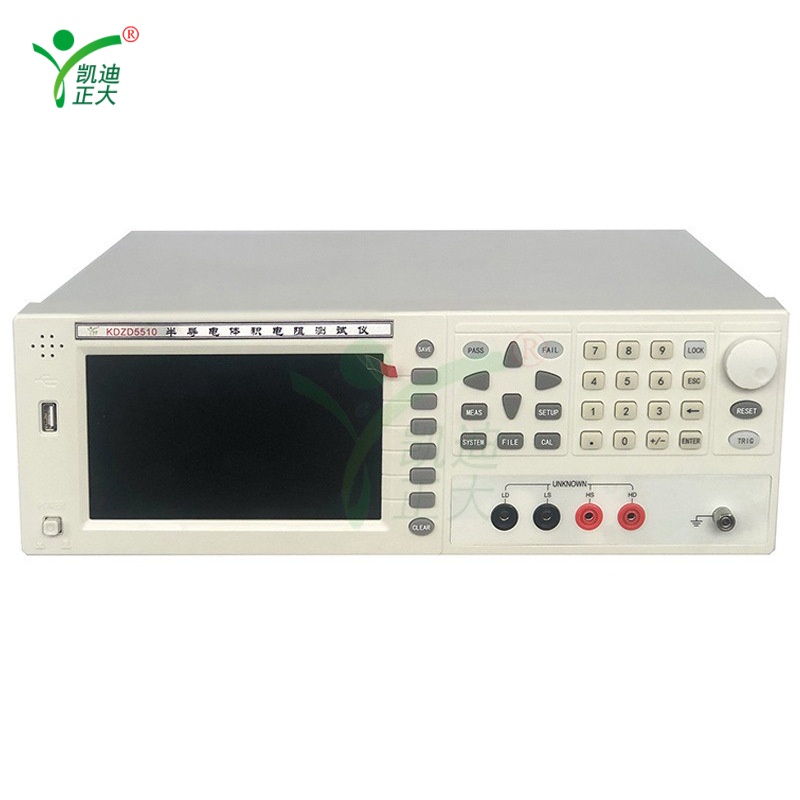
The KDZD wire and cable conductor resistivity tester can be used for various ultra-low DC resistance/resistivity tests of wires and cables, shunts, metals, conductors, etc. It can also measure the contact resistance of various switches. Contact resistance of the connector Relay coil and contact resistance; Transformer, inductor, motor, deflection coil winding resistance (for inductive loads, please use the unidirectional current mode for testing); Wire resistance Metal riveted resistors for vehicles, ships and aircraft Printed circuit board lines and hole resistance, etc.
Widely used in petroleum, chemical industry, smelting, paper making, power generation, subway rail transit, instrument industry and scientific research departments and other fields.
KDFRC AC and DC high voltage divider is a special instrument for field high voltage measurement. It can measure both the average value of DC high voltage and the effective value and true effective value of AC high voltage. The whole equipment consists of voltage divider and measuring instrument.
It is mainly used to measure the volume resistivity of conductor materials such as DC resistance of wire and cable conductors, copper rod aluminum rod, copper bar aluminum bar, etc
The instrument is used in research institutions, schools, factories and other units for the application of inorganic metal properties of new materials.
Applicable to electric power, petrochemical, metallurgy, railway, meteorology, industrial and mining enterprises, scientific research institutions, metrology departments, etc
KDZD automatic capacitance and inductance tester is specially developed to solve the problem of measuring capacitor capacitance value in substation
Used to measure and evaluate the grey density of insulators to ensure the performance and safety of power equipment.
An instrument for measuring the resistance value of the surface of an object, widely used in microelectronics, medicine, aerospace, precision machinery and other fields.
Can be used for wire and cable, shunt, metal, conductor and other ultra-low DC resistance/resistivity test.
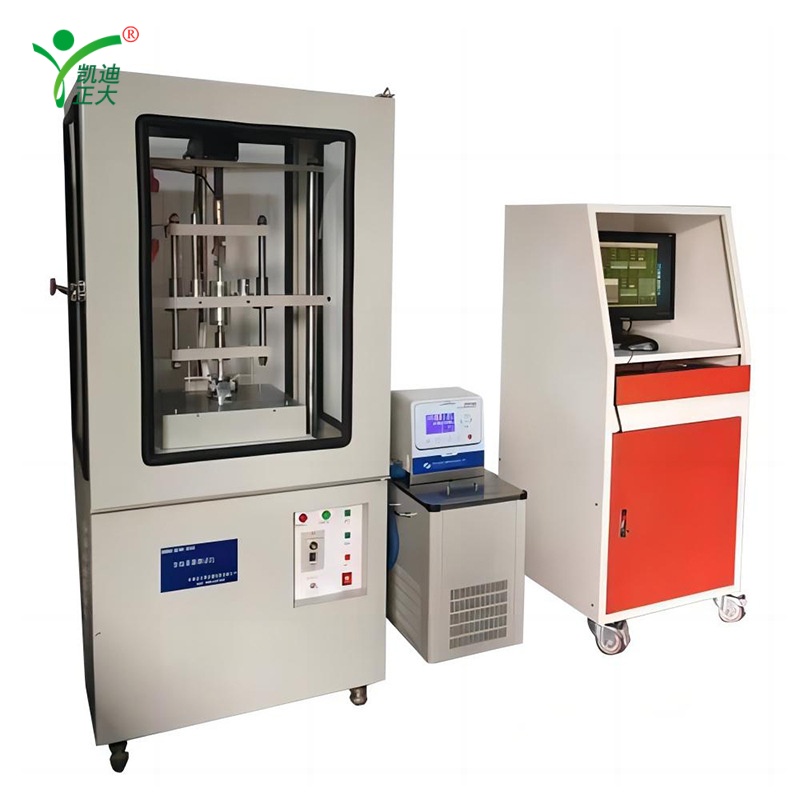
Suitable for plastic, rubber, thermal insulation materials, insulation materials and other low thermal conductivity materials test