Products

Products

Product list

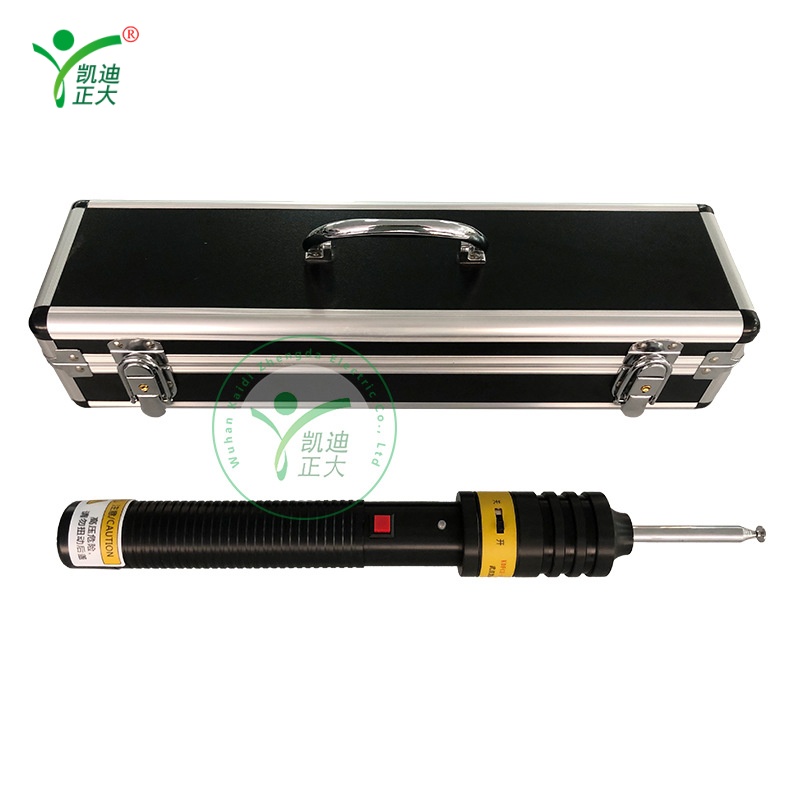
Wireless insulator detector

Mainly used for testing live suspension insulators or laboratory testing of the distributed voltage of suspension insulators

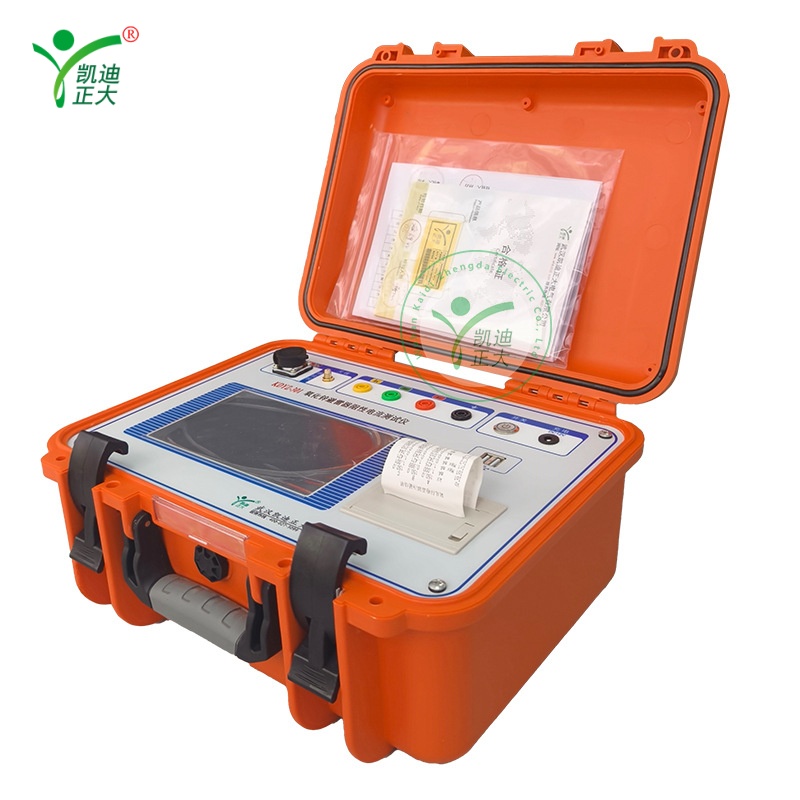
KDYZ-301 Wireless Zinc Oxide Surge Arrester Live Tester

Compliant with DL474.5-92, the KDYZ-301 is for live and lab testing of ZnO (MOA) arresters, measuring leakage/resistive current and 3rd–7th harmonics to detect aging and moisture. It is widely used in substations, power plants, and factories for commissioning, maintenance, and acceptance testing.

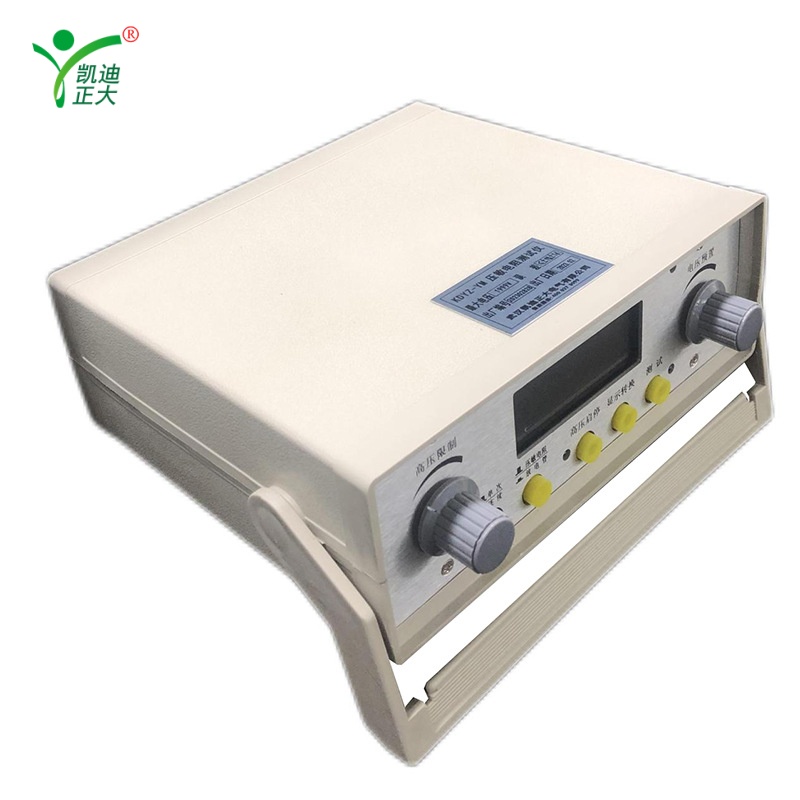
KDYZ-205 Zinc Oxide Surge Arrester Resistive Current Tester

The KDYZ-205 type zinc oxide lightning arrester resistive current tester is a specialized instrument used to test the electrical performance of zinc oxide lightning arresters.

KDYZ-301 Zinc Oxide Surge Arrester Live Tester

The KDYZ-301 is used for live or outage testing of ZnO lightning arresters at all voltage levels, detecting insulation moisture and valve plate aging. It is ideal for substation maintenance, field testing, and quality inspection in power systems.

KDYZ-201 Zinc Oxide Surge Arrester Live Tester

The KDYZ-201 is used for live or outage testing of ZnO lightning arresters at all voltage levels, detecting insulation moisture and valve plate aging. It is ideal for substation maintenance, field testing, and quality inspection in power systems.

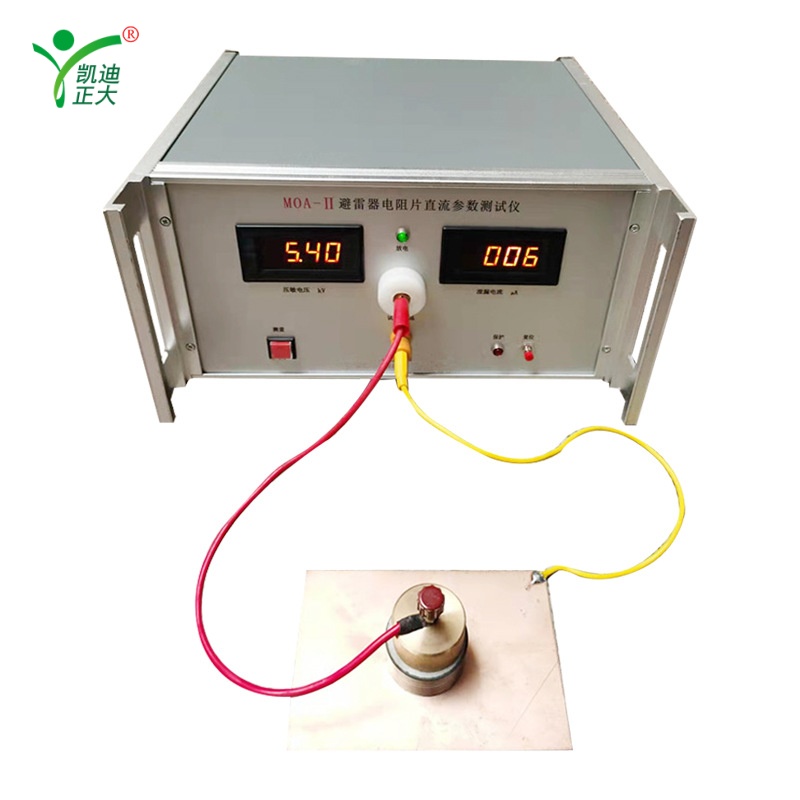
KDFC-2G Varistor Tester

The KDFC-2G is designed for DC parameter testing of overvoltage protection components like ZnO varistors, metal ceramic tubes, and vacuum lightning arresters. It is also used as a stable voltage/constant current source in R&D labs, quality control, and surge protection device manufacturing.

KDYZ-306 3-Phase ZnO Lightning Arrester Tester

The KDYZ-306 is used for on-site and laboratory testing of 3-phase zinc oxide (ZnO) lightning arresters. It measures total current, resistive current, and harmonics to detect insulation degradation and valve plate aging, making it essential for substation maintenance, power grid safety, and quality control in electrical equipment manufacturing.

KDFCZ-10 Lightning Arrester Counter Tester

The KDFCZ-10 is used to test and calibrate discharge counters in valve-type arresters (including silicon carbide and ZnO arresters). It complies with power industry standard DL474.5-2006 and is ideal for on-site use in power plants, substations, repair shops, and laboratories.

KDZD Portable ZnO Lightning Arrester Parameter Tester

The KDZD tester is used for on-site and laboratory testing of zinc oxide (ZnO) lightning arresters. It measures total current, resistive current, and harmonics to detect insulation degradation and valve plate aging, making it essential for substation maintenance, power grid safety, and quality control in electrical equipment manufacturing.

KDZD3800A Lightning Protection Component Tester

The KDZD3800A is designed for testing MOVs, GDTs, surge protectors, and metal ceramic discharge tubes. It is widely used by meteorological bureaus, power utilities, electrical equipment manufacturers, and industrial enterprises for quality inspection and maintenance of lightning protection components.

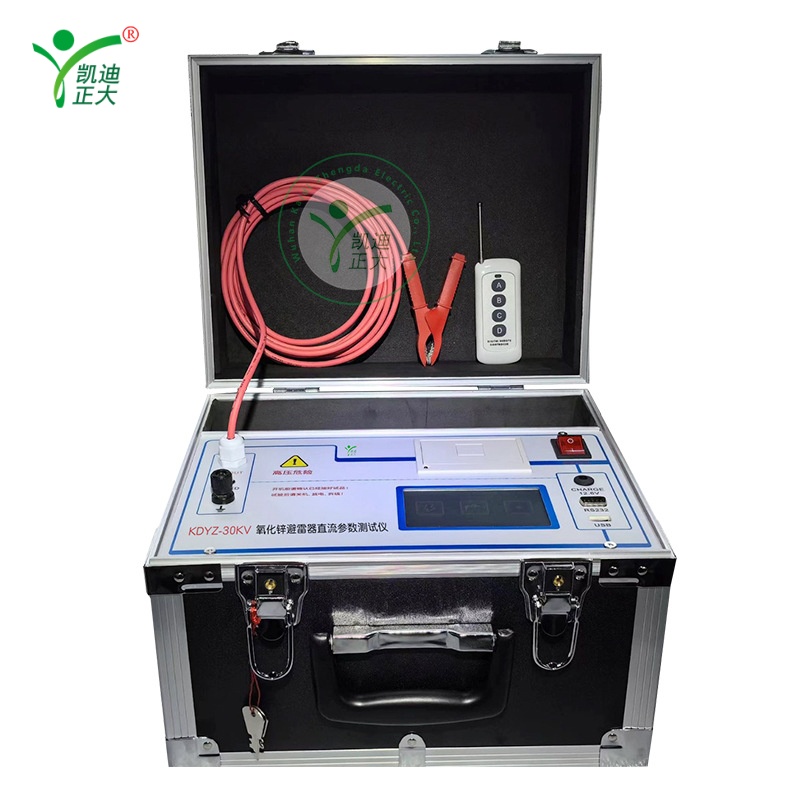
KDYZ-201 ZnO Lightning Arrester DC Parameter Tester

The KDYZ-201 is used for live or outage testing of ZnO lightning arresters at all voltage levels, detecting insulation moisture and valve plate aging. It is ideal for substation maintenance, field testing, and quality inspection in power systems.

KDZG Series DC High Voltage Generator – Portable Tester for Surge Arresters, Cables, Transformers &

  • DC withstand and leakage current testing of zinc oxide (ZnO) and magnetic-blow surge arresters
  • Insulation integrity verification of power cables, transformers, generators, and circuit breakers
  • Preventive maintenance and commissioning tests in substations, power plants, railways, and chemical facilities
  • On-site R&D and quality assurance in high-voltage equipment manufacturing

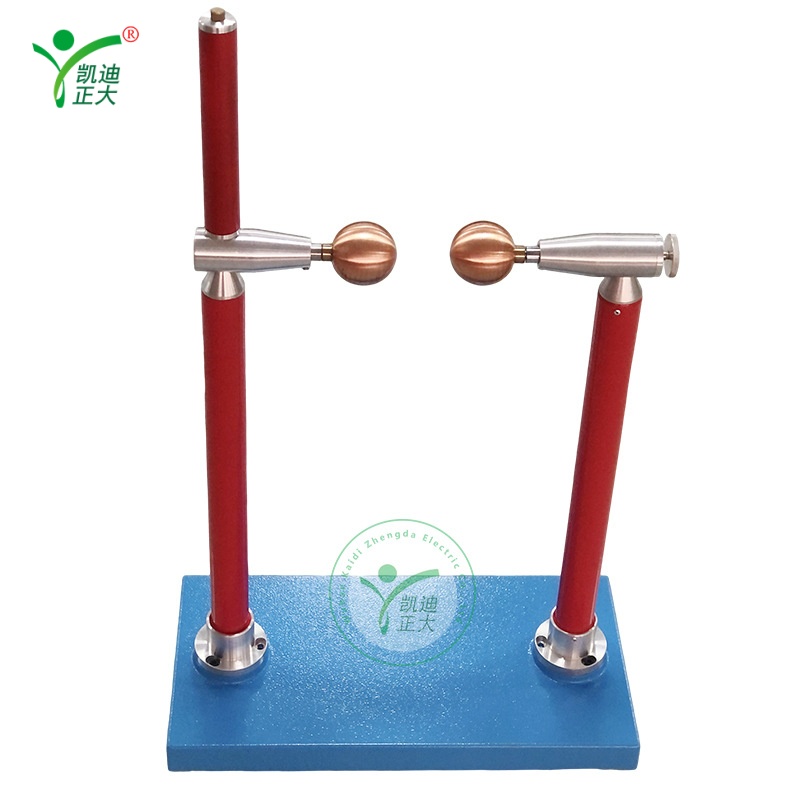
Experimental discharge ball gap pressure gauge

When conducting the experiment, connect the ball gap device in parallel with the test sample. The ball gap device itself has a protective resistor of 1 ohm per volt in series. First, adjust the ball gap to 60% of the test voltage (the discharge distance of the ball gap can be checked from the ball gap discharge voltmeter below, Tables 1 and 2). At this time, the test sample should be connected simultaneously. Measure the readings of the test transformer and low-voltage side voltmeter when the ball gap is discharged (take the average of 3-4 times), and then measure the readings of the voltmeter at 70% and 80% of the test voltage in the same way. Use this three-point line value as a curve (mostly a straight line), and then extend this curve (mostly calculated proportionally) to a position 10-15% higher than the required test voltage, as a discharge protection against overvoltage that may occur during the withstand voltage test process.

Discharge ball gap pressure gauge

Typical application environment of discharge ball gap pressure gauge (horizontal type)

The discharge ball gap pressure gauge (horizontal type) is mainly used in various professional scenarios that require high-voltage testing, overvoltage protection, and voltage calibration

KDFZC-10 Lightning Strike Counter Tester

Product Overview The pocket-sized lightning strike counter tester is a product meticulously designed and developed by our company's relevant technicians in