Overhead Transmission & Distribution Lines: Live testing of composite insulator sheds and housings to evaluate dirt and moisture aging performance.
Substation Maintenance: On-site inspection of composite insulators used in substations and high-voltage electrical equipment.
RTV/PRTV Coating Inspection: Hydrophobicity measurement and quality tracking for porcelain or glass insulators covered with Room Temperature Vulcanized (RTV) silicone rubber coatings.
Anti-Pollution Flashover Risk Assessment: Early identification of degraded insulation strength under wet weather conditions (rain, fog, dew) to prevent flashover accidents.
Response within
24 hours
Free warranty
12 month
On-line training
Support
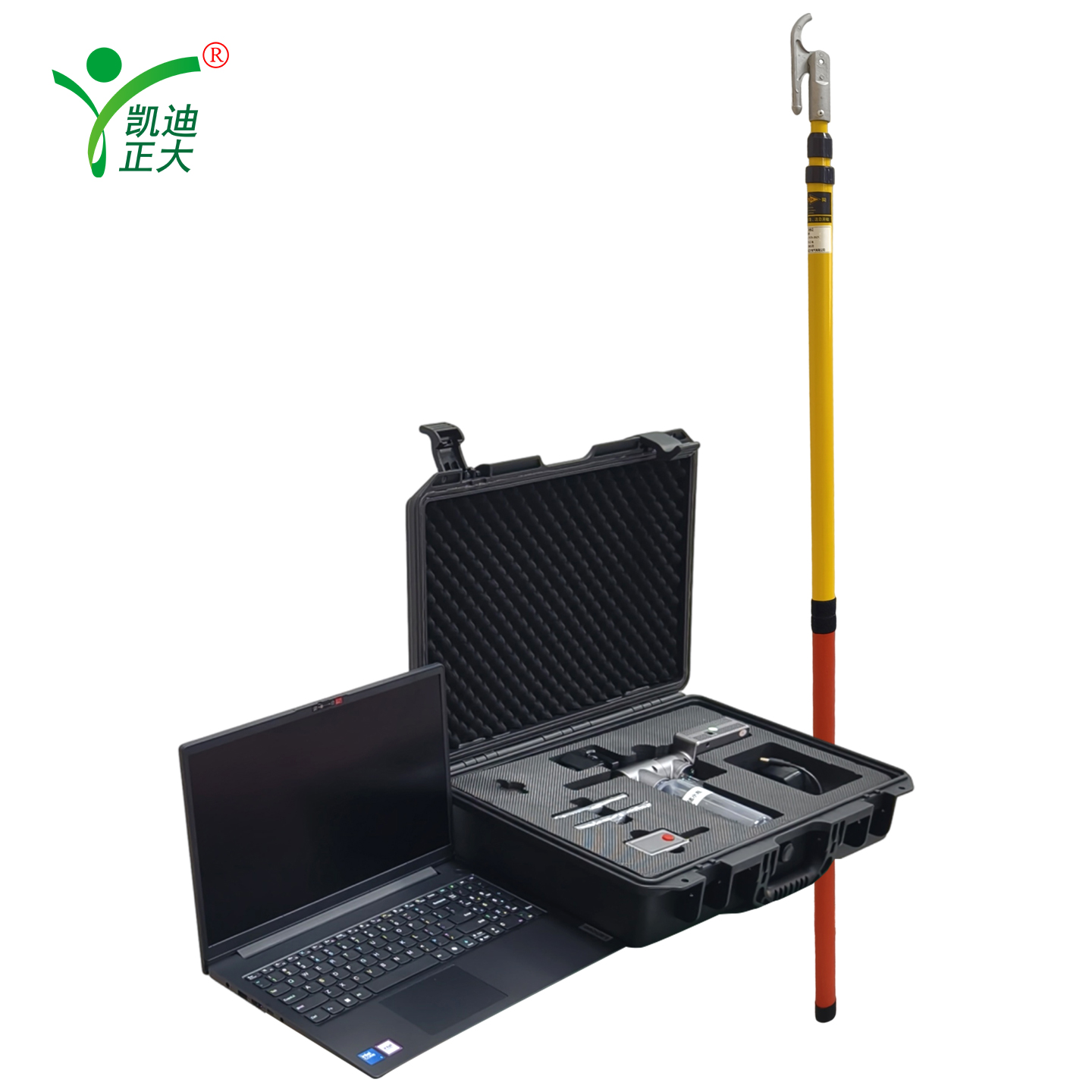
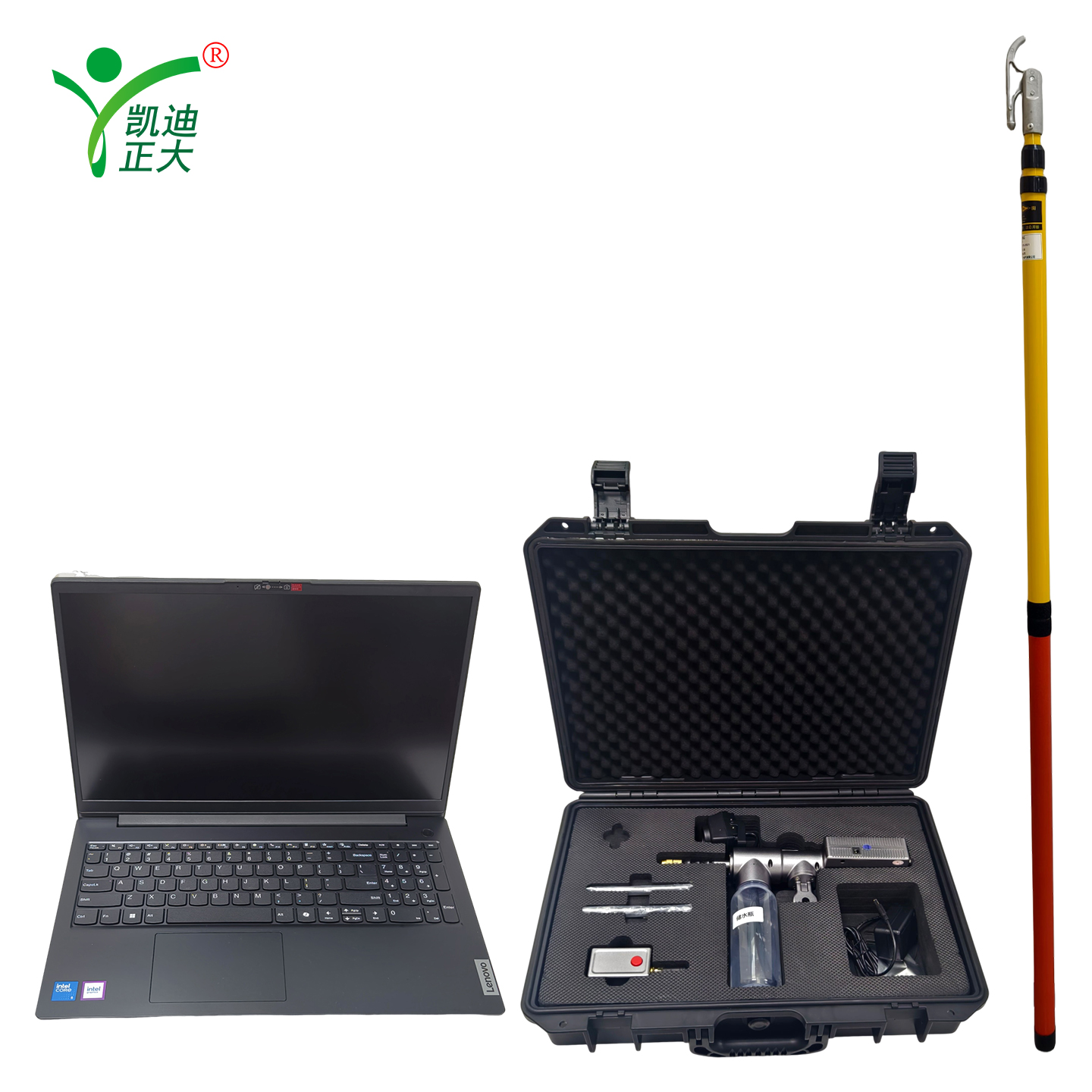
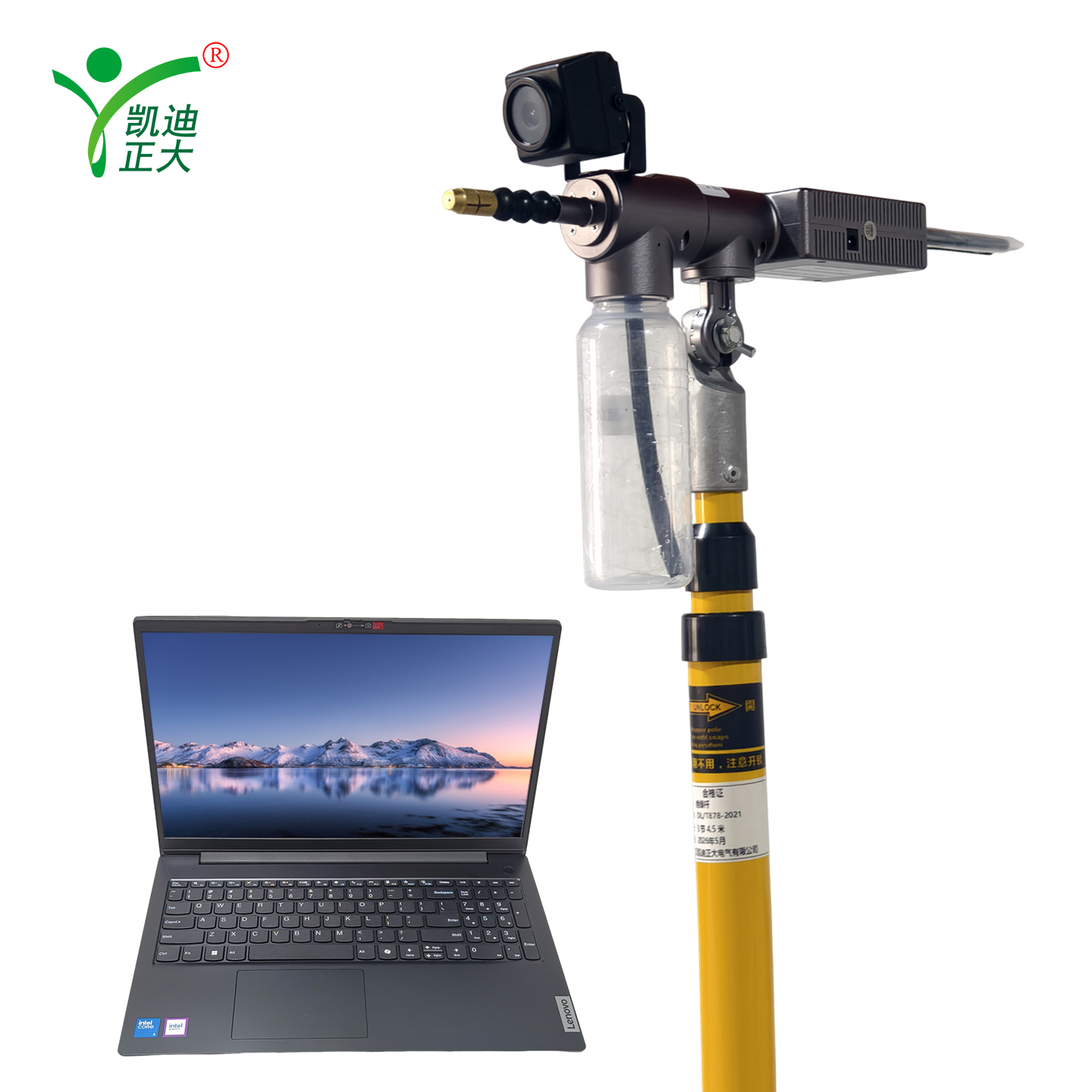
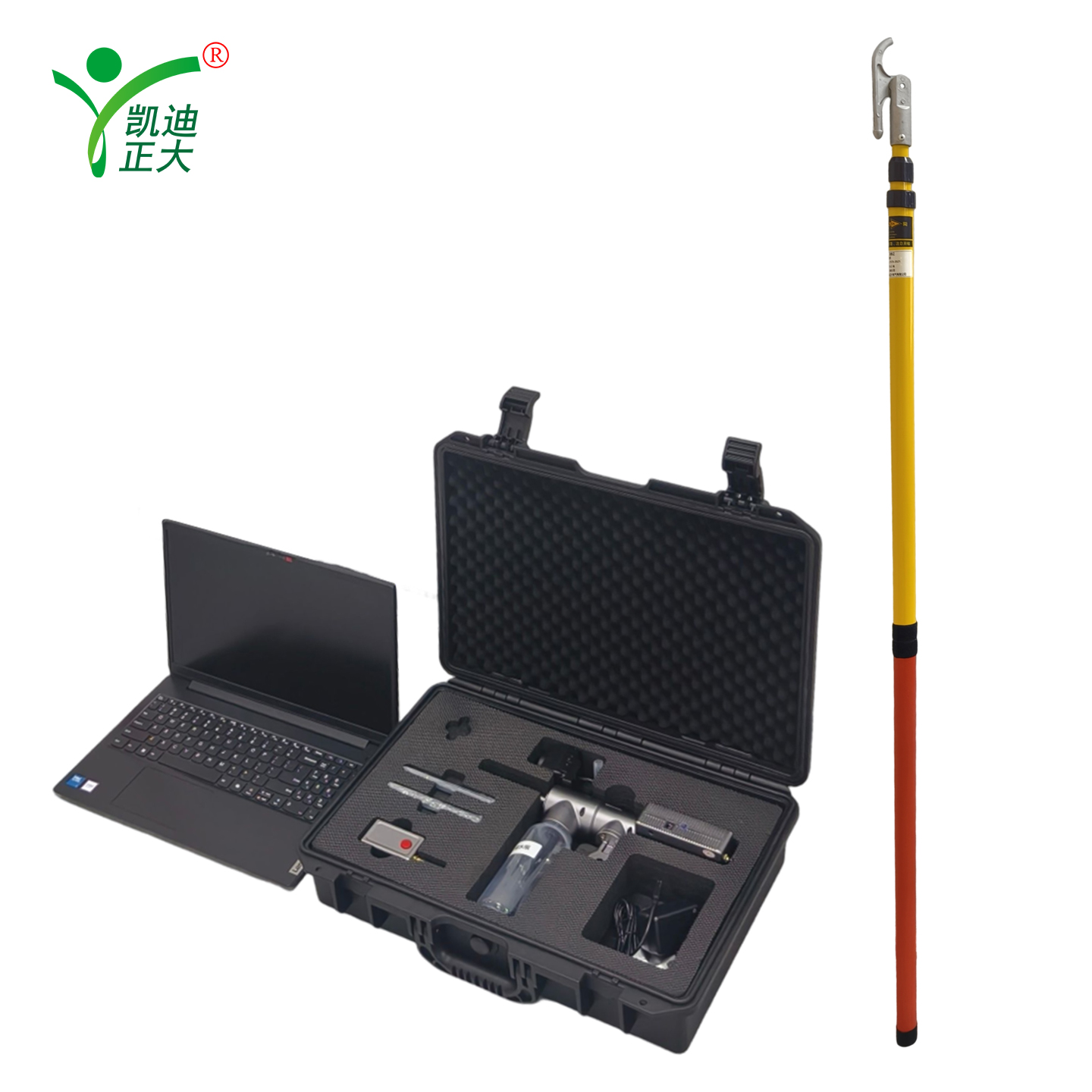
The KDYZ-HC1 Live Insulator Hydrophobicity Detection Device, manufactured by Wuhan Kaidizhengda Electric Co., Ltd., is an advanced diagnostic system designed to assess the anti-pollution flashover capabilities of composite insulators in active service.
Operating under the internationally recognized water spray classification method recommended by the Swedish Transmission Research Institute (STRI) and fully compliant with GB/T 24622-2022, the device utilizes a synchronized mechanism consisting of an automated motorized spraying system, a high-definition wireless imaging unit, and an intelligent computer analysis software suite. By spraying a fine, quantitatively precise water mist via wireless remote control and acquiring clear surface droplet images via an integrated HD camera terminal, the system effortlessly processes drop shapes to mathematically calculate the static contact angle ($\theta$) and automatically grade the hydrophobicity from HC1 (highly hydrophobic) to HC7 (completely hydrophilic). This allows grid operators to safely perform live inspections, log structural data trends, and generate accurate diagnostic reports to ensure grid stability.
Safe Live-Line Operation: Features a lightweight, high-strength 4.5m telescopic epoxy insulating rod and a long-range wireless remote control ($>100\text{m}$), ensuring operators remain at a safe distance from high-voltage terminals.
Precise Quantitative Atomization: The motorized spraying unit utilizes a universal joint and micro-nozzle to release a precisely atomized mist ($0.7\text{mL} \sim 1\text{mL}$ per spray, up to 25 cycles) at a stable 3 bar pressure, perfectly matching legal verification rules.
Dual-Method Smart Analytics:
Water Spray Classification (HC Method): Digital image processing algorithms crop the insulator shed and automatically determine the HC1–HC7 wetting level based on shape factors and wet area percentages.
Static Contact Angle Method ($\theta$): Supports manual 3-point edge extraction to calculate the exact balance contact angle ($\theta = 180^\circ - \angle \beta$) to aid auxiliary verification.
Advanced HD Visuals & Connectivity: Equipped with an 8-megapixel dedicated camera terminal that establishes an independent local Wi-Fi hotspot (Repeater-550EEC) to instantly stream and capture sharp JPEG graphics onto the analysis laptop.
Comprehensive Database & Historical Tracking: The evaluation software stores raw images, testing logs, and localized parameters (such as operator name, station pole number, etc.). It generates standard PDF/Word inspection reports and displays historical trend lines to track insulator aging over time.
Testing Methodology: Water Spray Classification (HC Level Grading) & Static Contact Angle Measurement ($\theta$)
Wireless Operation Band: 2.4 GHz
System Environment Conditions: Ambient Temperature: $0^\circ\text{C} \sim 40^\circ\text{C}$; Wind Force: $< \text{Grade 4}$
Applicable Standards: GB/T 24622-2022, GB/T 19519-2014, DL/T 1000.3-2015, DL/T 1474-2021
Remote Control Distance: $\ge 100 \text{ meters}$ (Omnidirectional $360^\circ$ signal receiving angle)
Remote Controller Power Supply: $1 \times 3.6\text{V}$ Lithium Battery
Water Pump Flow Rate: $0.6 \text{ L/min @ 3 bar}$
Atomized Spray Stream Angle: $30^\circ \text{ @ 3 bar}$
Nozzle Injection Coverage Angle: $50^\circ \sim 80^\circ$
Single-Shot Spray Volume: $0.7\text{ mL} \sim 1.0\text{ mL}$
Standard Test Cycle: 25 consecutive sprays (Total water volume: $17\text{ mL} \sim 25\text{ mL}$)
Water Tank Capacity: $250\text{ mL}$ (Deionized water recommended)
Main Device Power Supply: $12\text{V } 2000\text{mAh}$ Lithium Battery Pack (Guarantees $\ge 2 \text{ hours}$ of continuous spraying, sufficient for over 100 measurements per charge)
Camera Sensor Resolution: 8 Megapixels
Output Image Format: JPEG
Antenna Specifications: Directional, non-bendable, 5dB omnidirectional gain
Communication Interface: Direct Wi-Fi Hotspot connection (Repeater-550EEC, password-free)
Image Transmission Distance: Within $50 \text{ meters}$
Mounting & Articulation: Adjustable universal joint bracket with fine vertical angle tuning
Insulating Pole Material: High-strength Epoxy Resin
Insulating Pole Mechanism: Telescopic design, total extended length of $4.5 \text{ meters}$
Data Processing Terminal: Dedicated Laptop pre-loaded with the Insulator Hydrophobicity Detection & Evaluation Software (requires USB encryption dongle)

Oversea Sales Manager