09 Jul-2026
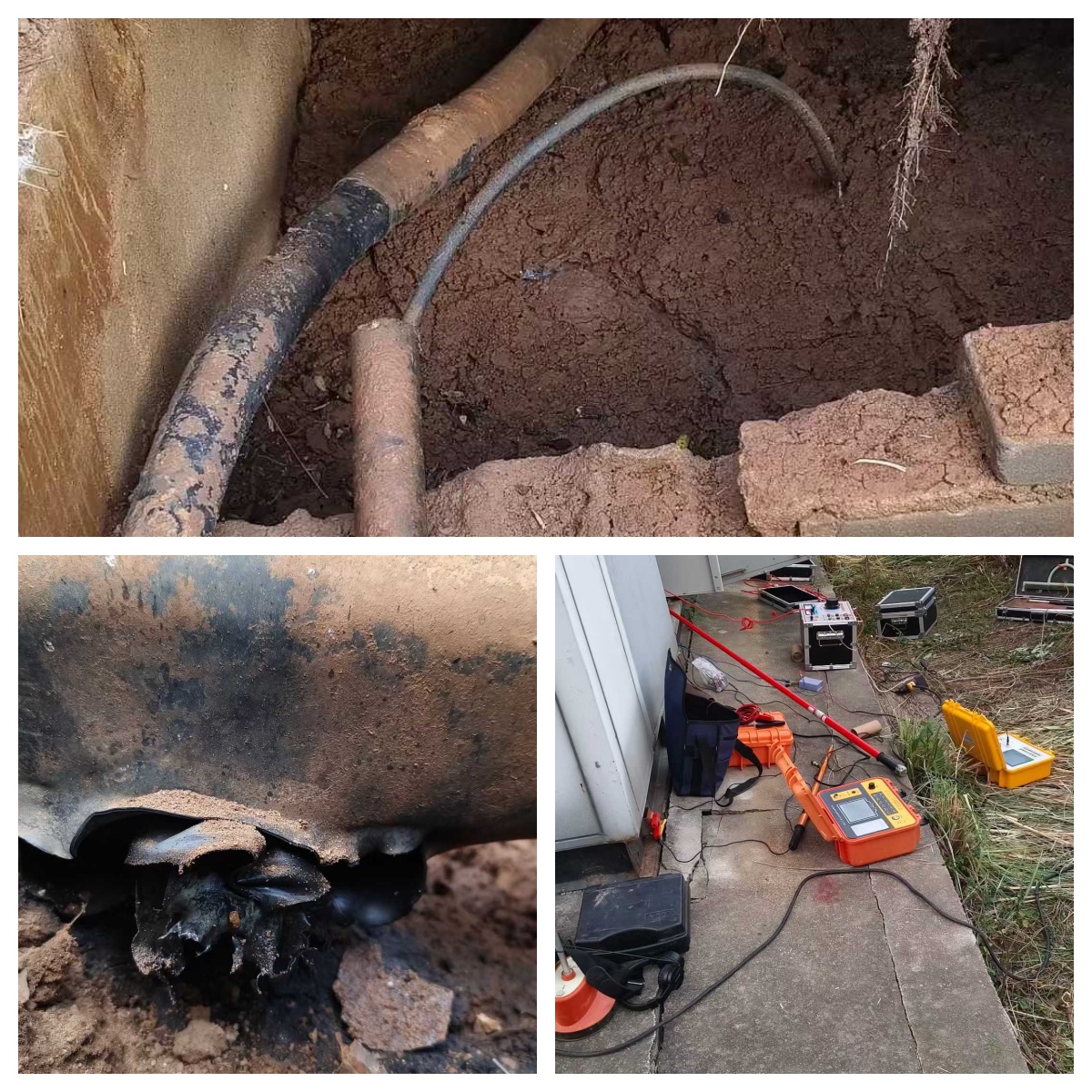
In modern urban power grids, large-scale industrial enterprises, and railway transit networks, underground cables play a vital role. However, as cable mileage continues to surge, maintenance personnel face increasingly severe challenges: when a fault occurs in a long-distance cable, locating it is often like "finding a needle in a haystack." Traditional troubleshooting methods are not only time-consuming and labor-intensive but also involve blind excavation that damages road surfaces, leading to prolonged power outages and significant economic losses.
How can hidden faults in long-distance cables be efficiently discovered? How can the pinpointing difficulties of complex faults, such as high-resistance and flashover issues, be thoroughly resolved? The
KD-216H High and Low Voltage Cable Fault Comprehensive Tester is redefining precision and efficiency in power maintenance through its three-pronged solution: "Precise Ranging, Intelligent Noise Reduction, and Deep Path Tracing."
1. Breaking Limits: Reshaping "Ranging" with High Sampling Rates and Wide Ranges
The primary pain point in long-distance cable fault detection lies in severe signal attenuation and the accumulation of positioning errors. Traditional equipment often falls short when dealing with cables spanning dozens of kilometers. The KD-216H breaks this bottleneck at the fundamental hardware level.
The device boasts an ultra-large testing range of no less than 100km, easily covering urban main grids and long-distance transmission lines for one-time full-length scanning without cumbersome segmented testing. To address signal attenuation, the host provides a real-time sampling frequency of up to 250MHz, coupled with a software cursor resolution of 0.10 meters. The system error is strictly controlled within ±1%, and the precise pinpointing error reaches an astonishing ±0.2m. This means that even on cables spanning dozens of kilometers, the equipment can sensitively capture weak fault reflection waveforms, completely eliminating the embarrassment of knowing the general area but failing to find the exact spot.
Additionally, the device features 8 levels of pulse widths ranging from 50ns to 10μs, with intelligent software auto-matching. It automatically selects wide pulses for long cables to ensure energy transmission and switches to narrow pulses to eliminate blind spots for near-end faults, truly achieving "accurate far-end testing and zero blind spots at the near end."
2. Intelligent Noise Reduction: Conquering "Pinpointing" with Advanced Algorithms and Strong Breakdowns
Cable faults are notoriously difficult to locate due to complex fault types (e.g., high-resistance flashover, intermittent leakage) and noisy on-site environments. The KD-216H tackles this through dual innovations in hardware and software, making fault points "impossible to hide."
In waveform analysis, the device is equipped with a 12.1-inch industrial-grade LCD screen and a Win7 operating platform, supporting both touch and mouse operations. Whether it is an open circuit, short circuit, or extremely difficult high-resistance leakage and flashover faults, the device uses methods like low-voltage pulse, impulse flashover, and direct flashover to convert hidden faults into clearly visible waveforms. The large screen allows for side-by-side comparison of fault and full-length waveforms, and combined with intelligent algorithms to filter out interference, it significantly lowers the technical barrier for waveform analysis.
For ground pinpointing, the matching
KDZD850 Ultra-Quiet Precise Pinpointer is a game-changer against environmental noise. Utilizing BNR (Background Noise Reduction) intelligent technology and ultra-quiet processing, it caps the impact discharge volume at 84dB(A). Even on busy city avenues or in noisy factories, it effectively filters out background noise to accurately capture the discharge sound of the fault point. Furthermore, the system includes a 3kVA/50kV (DC 70kV) oil-immersed test transformer, providing strong and stable high-voltage impact energy to forcibly break down high-resistance faults, ensuring an ample signal source for precise pinpointing.
3. Deep Path Tracing: Ending "Blind Excavation" with Integrated Path Detection
In the renovation of old pipe networks or municipal maintenance, missing cable maps or unclear routing often lead to situations where "the fault is known to exist, but the excavation site is wrong." The KD-216H system is not just a fault tester; it is a complete underground pipeline detection solution.
The matching
KD-2190 Cable Path Finder uses a dedicated 9.6kHz frequency with a maximum detection depth of 20 meters, a routing error of only ±2cm, and a depth error controlled within ±5cm. After locking the fault distance, maintenance personnel can directly use this function to confirm the actual routing and burial depth of the cable. This not only prevents road damage and pipeline destruction caused by blind excavation but also compresses days of troubleshooting and repair work into a highly efficient process completed within hours.
Conclusion: From "Finding a Needle in a Haystack" to "Following the Map"
In the field of power maintenance, time is profit and safety is life. With its hardcore advantages of ultra-large range, high sampling rate, intelligent noise reduction, and deep path tracing, the
KD-216H High and Low Voltage Cable Fault Comprehensive Tester upgrades cable fault location from traditional "empirical blind testing" to "data-driven intelligent testing."
Whether dealing with difficult high-resistance faults or emergency repairs for long-distance cables, the KD-216H provides you with robust technical support. Choosing the KD-216H means choosing a highly efficient, precise, and safe new path for power maintenance, ensuring confidence in every fault investigation and making power grid operations stronger and more reliable.