Profile:
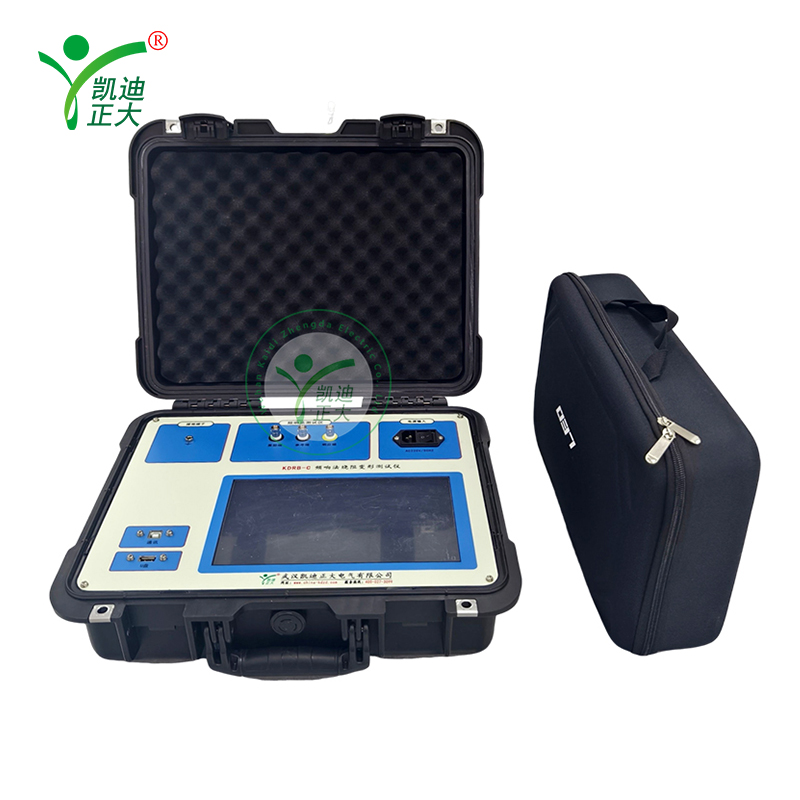
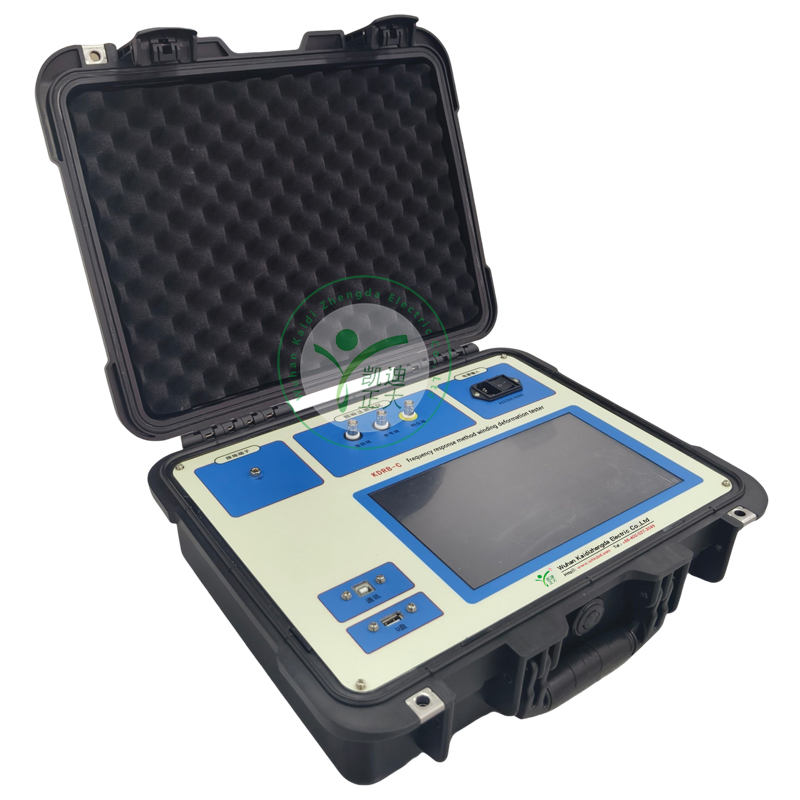
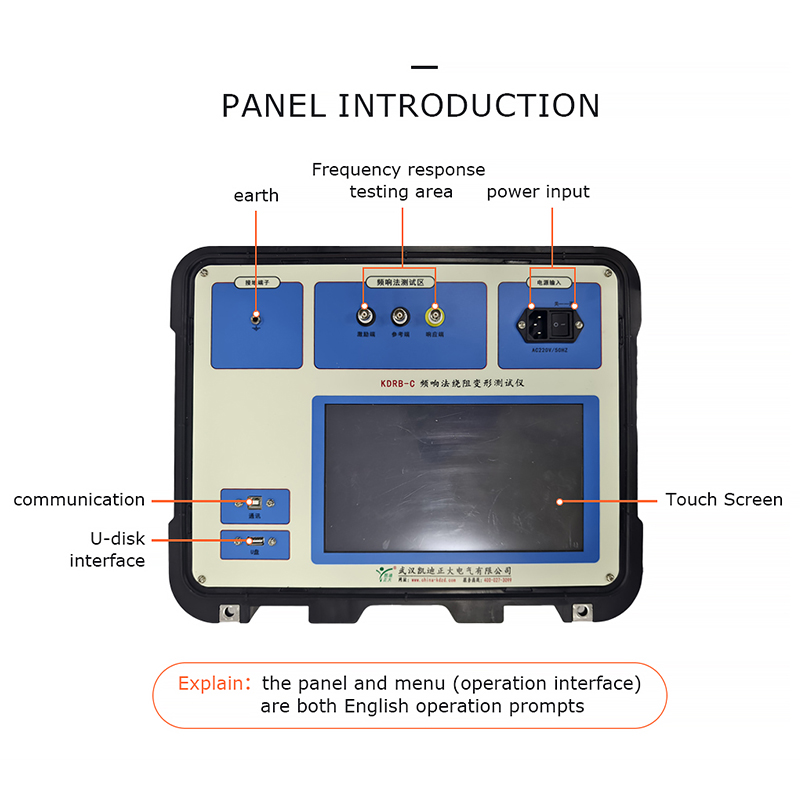
KDRB-C employs a frequency response analysis method compliant with the DLT911-2016 standard for measuring and analyzing internal transformer faults. It features a 32-bit ARM processor and DDS frequency synthesis technology, and uses a 16-bit high-precision A/D converter, supporting both standalone operation and PC connection. A 10.1-inch touchscreen LCD, built-in printer, and comprehensive data management functions enable accurate winding deformation assessment with intuitive and convenient operation.
Features:
1. Frequency response scanning range: 1kHz-2000kHz (2MHz), minimum resolution: 0.1kHz;
2. Simultaneously supports frequency and impedance methods;
3. 32-bit ARM processor employing DDS frequency synthesis technology;
4. 16-bit high-precision A/D sampling;
5. USB interface for data transfer;
6. 10.1-inch color LCD screen with Chinese display and touchscreen operation support;
7. Supports both standalone and PC connection operation modes for convenient field use;
8. Built-in printer for on-site printing of 2D graphics and results;
9. Supports horizontal and vertical data comparison and 2D, 3D, and logarithmic display;
10. Large-capacity flash memory: Stores up to 200 sets of data and supports USB flash drive transfer;
11. PC client software for database management, multi-curve comparison, zooming, and PDF report generation;
12. Compliant with DL/T911-2004 and DLT 1093-2018 standards.
Parameter:
Frequency response method
1. Sweep frequency range: 1KHZ ~ 2000KHZ (2MHZ).
2. Sweep resolution: minimum 0.1khz.
3. Output signal amplitude: 20Vp-p
4. Output frequency accuracy: 0.001%
5. Frequency response range: -120 dB ~ +20 dB
6. Frequency response resolution: 0.1dB
7. Input impedance: 1MΩ
8. Output impedance: 50Ω
9. Measurement speed: about 50 seconds/phase (1MHZ)